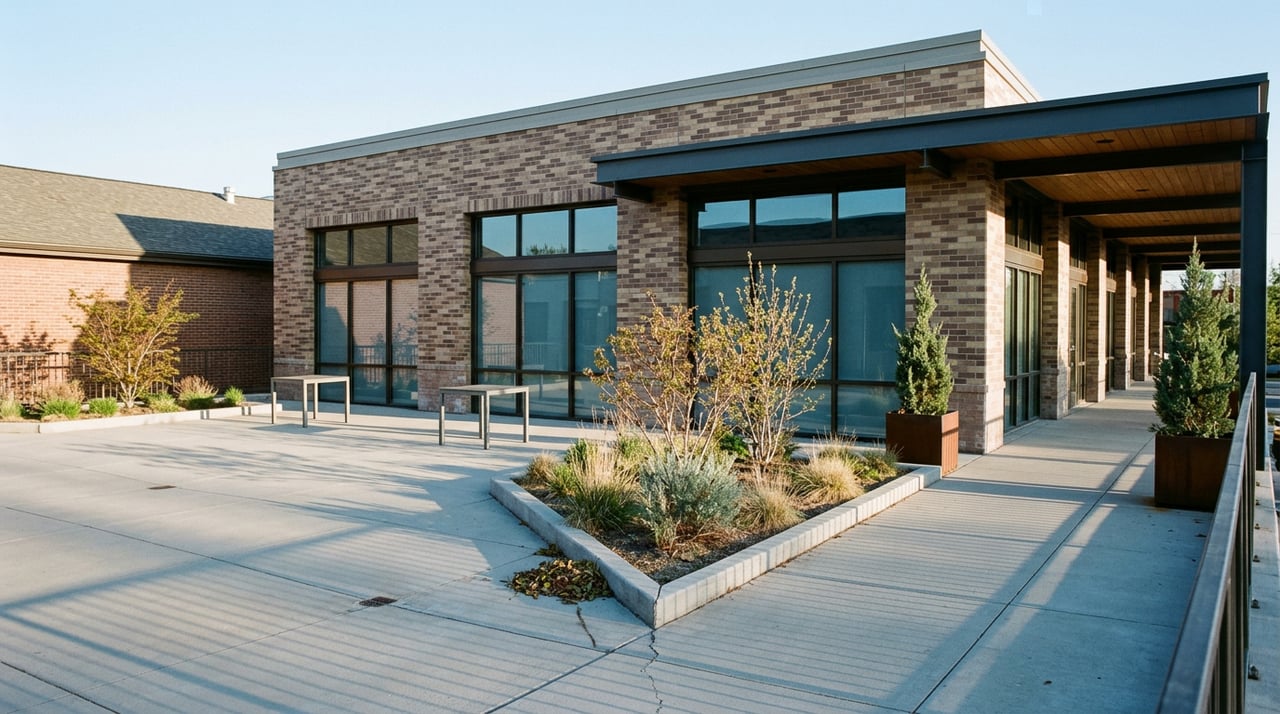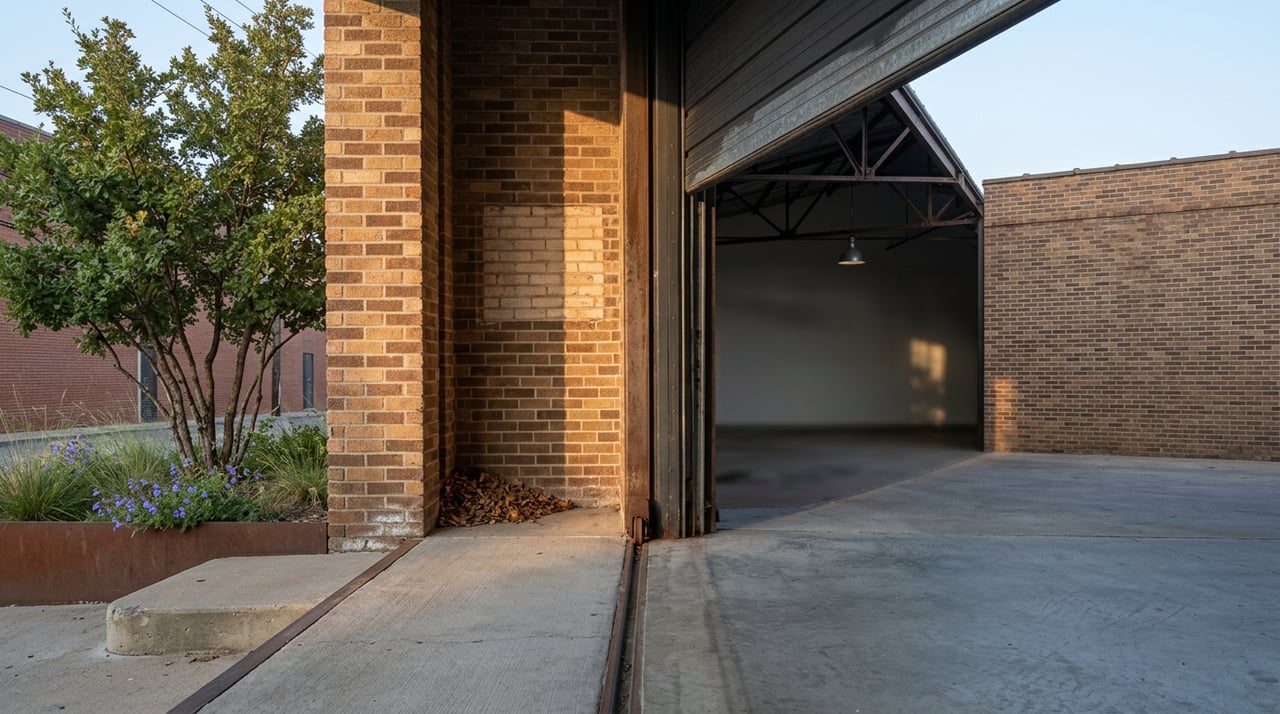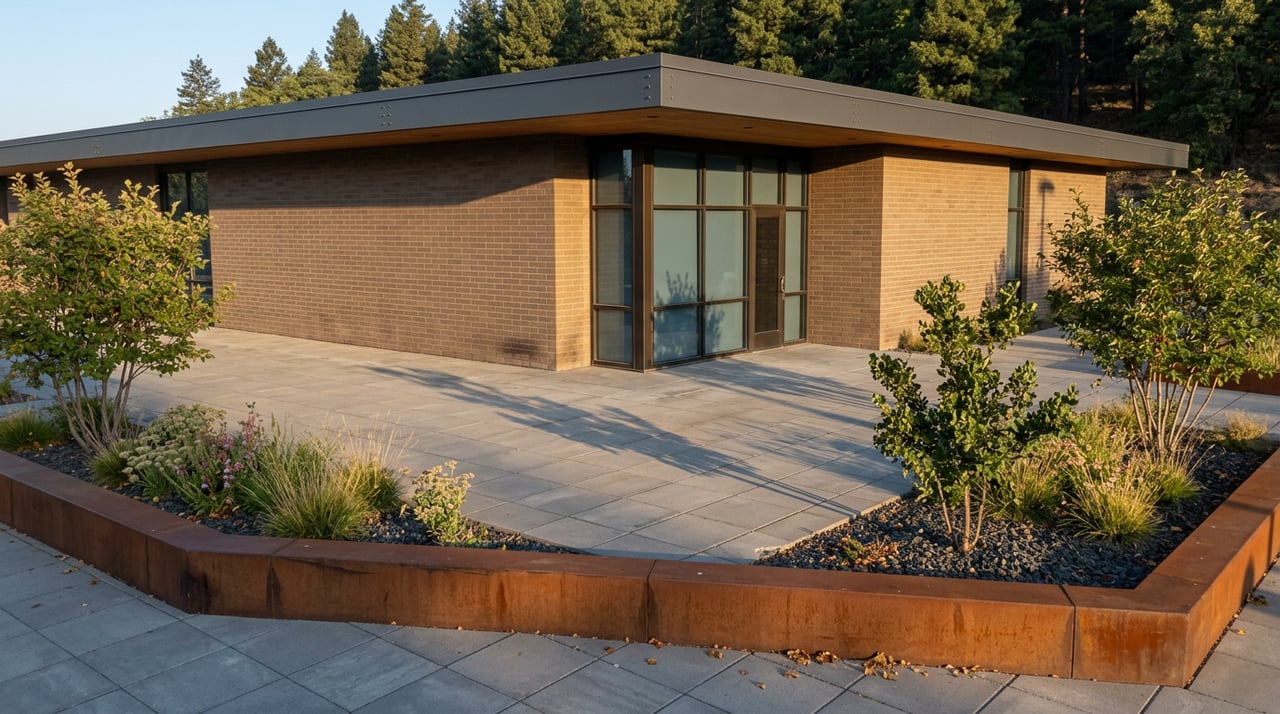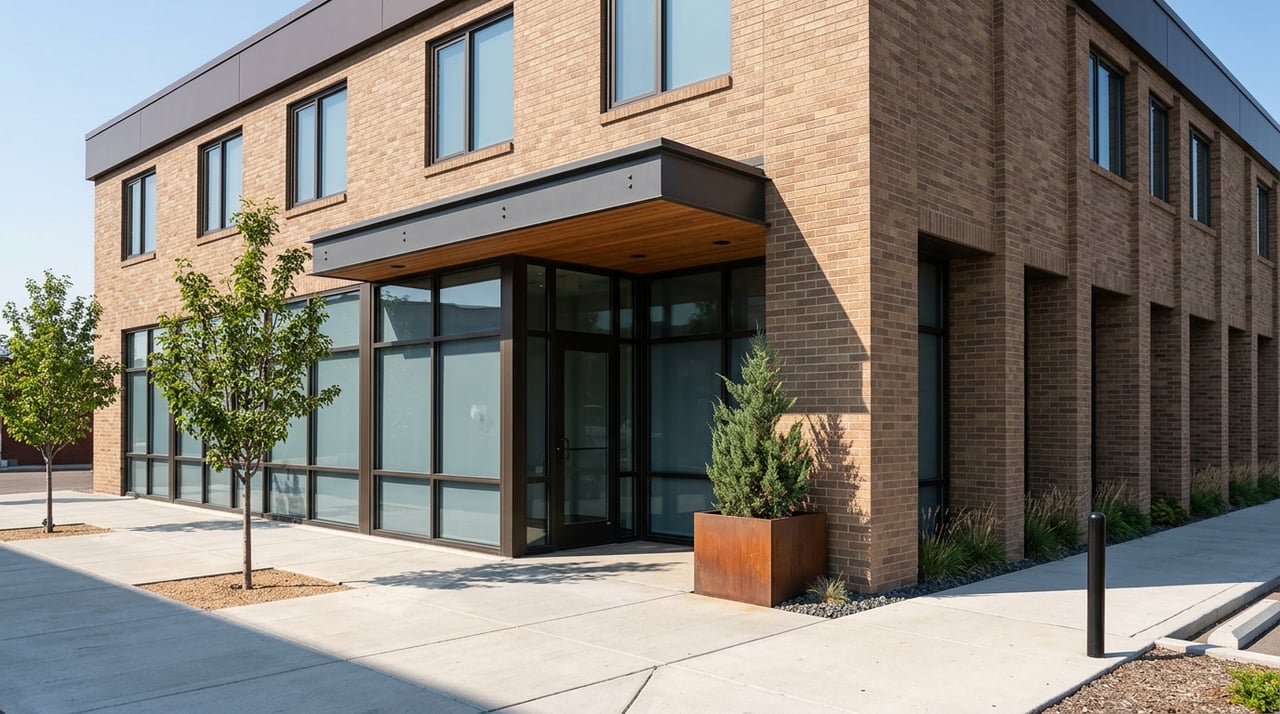
For years, a small firm looking at 3,000 square feet in Holladay had one honest option: sign a five to seven year lease on a Class B suite in a building that was probably built before the year 2000, take the TI package, and hope the headcount held. As of February, that comparison has a second column.
Kiln Holladay opened on February 2, 2026 inside the Holladay Hills redevelopment, and the enterprise names it has already absorbed change what a Central East tenant search actually looks like.
The Number That Doesn't Fit
The Salt Lake metro is a tenant's office market. In Q1 2026, the Salt Lake City overall office vacancy rate, including sublease space, remained flat quarter-over-quarter at 23.0%, reflecting a 120-basis-point improvement year-over-year from 24.2% in Q1 2025. Headline vacancy that high should give any tenant leverage.
Then the submarket data intrudes. The lowest office vacancy in the Salt Lake City market was 6.38% in the Holladay–Millcreek submarket, while the highest office vacancy in the market was 43.62%, recorded in Salt Lake City–West Central. The metro average is describing a market Holladay isn't in.
The pipeline data closes the trap. Cushman & Wakefield's Q4 2025 marketbeat identifies Holladay Hills in the Central East submarket, containing 180,000 sf. The construction pipeline has effectively stalled, with no office buildings currently under construction. This is unprecedented compared to the 10-year average of 1.1 msf in annual office deliveries.
So the honest reading is this: the metro is soft, the submarket is tight, and the only meaningful new office coming online in the entire Salt Lake City office market sits inside a single redevelopment on Highland Drive. That is not a market where a small tenant should assume leverage from a countywide vacancy figure.
What Kiln Is Actually Absorbing
Kiln is not filling that 180,000 square feet with a single anchor lease. It is filling a 52,000 square foot piece of it with membership contracts, and the members are not the sole practitioners a coworking floor usually attracts. The 52,000 square-foot flex-office and lifestyle campus anchors Holladay's revitalized Cottonwood corridor. Kiln Holladay has already attracted prominent companies including T-Mobile, Intuit, Penn Mutual, and Assos. Mastercard has since been added to that list.
Those are enterprise names that would ordinarily land in a downtown tower on a multi-year direct lease. In Holladay, they have taken flex memberships instead. That is a signal about the direction of demand, not a curiosity.
The rest of the Q4 2025 leasing data cuts the same way. Renewal activity totaled 248,000 sf, with key extensions such as Bridge Investment Group Partners' 60,500-sf renewal at Sandy Towers East and TruHearing Inc.'s 56,000-sf renewal at Vista Station 4, both located in the South East submarket. Due to limited availability of quality top-tier space, large tenants are renewing or expanding leases in Class A buildings to secure additional space, representing 73% of Q4 2025 renewals. Large tenants are locking in Class A. New enterprise foothold demand is going to flex. What is left in the middle is small direct leases in older stock, and that is exactly what a Holladay owner-landlord is trying to place.
The Tenant Math, Side By Side
For a 4,000 square foot team weighing a traditional five year lease against a Kiln footprint of comparable capacity, the comparison is not obvious from a per-square-foot number.
| Factor | Traditional Class B lease, Holladay | Kiln Holladay membership |
|---|---|---|
| Term | 5 to 7 years typical | Month to month or annual |
| Rate reference | Cottonwood Heights average asking rent of $29.29 per square foot as the nearest Holladay comparable | Per-seat or per-suite, includes furniture, IT, conference rooms, reception |
| TI capital | Landlord amortizes over the term; tenant amortizes anything above the allowance | None; the space is delivered |
| Expansion | Right of first offer at best; more often a second lease or a sublet | Add seats or upgrade a suite inside the same contract |
| Contraction | Assign or sublet at market risk | Reduce seats at the next term |
| Building age | 43.69% of local office properties were completed before the year 2000 | Delivered 2026 |
| Reception, coffee, meeting rooms | Tenant runs and staffs | Included, plus event programming |
Read one direction, the flex option looks expensive per seat. Read the other, the traditional lease looks expensive once you honestly price the TI amortization, the front-desk salary, the coffee service, and the fact that a 4,000 foot suite has to be sized for peak headcount rather than actual daily occupancy.
The interesting move is not to declare one side the winner. It is to notice that the comparison exists in Holladay at all. Twelve months ago it did not.
Where Traditional Still Wins
Flex-office arithmetic breaks down for certain tenant profiles, and a Holladay search should identify them early:
- Medical and dental practices with chair, plumbing, imaging, and privacy build-outs. A dentist is not moving into a coworking suite next quarter.
- Established professional firms with long client tenure and a brand-forward street address. A three-decade law or wealth-management practice trades on the sign, not the amenity deck.
- Owner-users buying a small building for occupancy plus long-term appreciation. Flex is a leasing product, not an ownership one.
- Teams above roughly 20 seats where the per-seat flex premium starts to compound past what a direct lease would cost, even with honest TI amortization.
- Any tenant needing 24/7 secured access to specialized equipment, on-site server rooms, or a lab layout.
For everyone else, and especially for two- to fifteen-person satellite offices of out-of-state companies exploring the Salt Lake market, the flex column is now a serious column.
What This Means If You Own A Small Holladay Office Building
The tenant pool that used to walk into a 3,000 square foot Class B suite in Holladay has quietly split. The medical, dental, and long-tenured professional segment is still there. The exploratory small-team segment, which was the swing tenant for many small Holladay landlords, now has a credible east-bench alternative that did not exist before Kiln opened.
The countywide 23% vacancy is describing a market Holladay isn't in. The competitive pressure on a small Holladay landlord now comes from a coworking floor on Highland Drive, not from a downtown tower with a sublease list.
That is not a distress signal. Holladay Hills is a 58-acre mixed-use project located at the former Cottonwood Mall site in Holladay, Utah, developed by Woodbury Corporation, Millrock Capital, LLC and Ball Ventures, and the surrounding retail draw is a tailwind for every small office building within a mile of it. The mixed-use project includes tenants such as Trader Joe's, Chipotle, Rio Acai, Vio Med Spa, The Milkshake Factory and more. That is real foot traffic and real lunchtime amenity for a Class B tenant next door.
The tactical response for a small owner is unglamorous. Price the medical and long-tenured professional suites for their tenancy profile and hold. For the flexible suite that used to attract the exploratory small team, sharpen the delivery. Turnkey furniture packages, a shorter permitted term, a real conference-room amenity in the building, and a clean sightline to the Holladay Hills retail become the difference between filling that suite in ninety days and carrying it for a year. The competition is no longer the vacant floor down the street. It is a membership contract.
The FAQ
Is the 6.38% Holladay–Millcreek submarket vacancy still accurate in 2026? That figure is the most recent granular submarket read available and reflects 2024 tracking. The Q1 2026 metro-level improvement to 23.0% suggests the submarket has not loosened materially, but a tenant negotiating today should ask a broker to pull current same-submarket comps rather than rely on either the metro or the submarket headline.
Does Kiln Holladay compete with Class A office buildings or Class B? Both, but the substitution is sharper against small Class B suites. A 40,000 square foot enterprise Class A user is not choosing between a tower and a Kiln floor. A 3,500 square foot growing team absolutely is.
How does the Holladay Hills TIF affect a nearby landlord? The Holladay Redevelopment Agency currently manages two project areas in Holladay City: Holladay Village Center, and Cottonwood Mall (Holladay Hills), and the tax increment structure applies inside the project area boundary. A neighboring building's tax bill is unaffected by Holladay Hills' TIF, but the neighboring building's tenant demand is affected by the amenity draw the TIF is financing.
Will more traditional office get built in the Central East submarket? Not on any timeline that matters to a 2026 tenant search. With no office buildings currently under construction, unprecedented compared to the 10-year average of 1.1 msf in annual office deliveries, the next delivery of size in this submarket after Holladay Hills has not been announced.
If you are a small tenant weighing a Holladay lease against a Kiln membership, or a Holladay owner-landlord trying to read what Kiln's arrival does to your tenant pool, the arithmetic is worth doing carefully. Dan Rip Commercial Real Estate works this submarket in detail, from tenant representation on 2,000 to 15,000 square foot requirements to advisory for small institutional landlords holding older Class B stock. Schedule a free consultation to walk through the numbers on a specific building or a specific requirement.