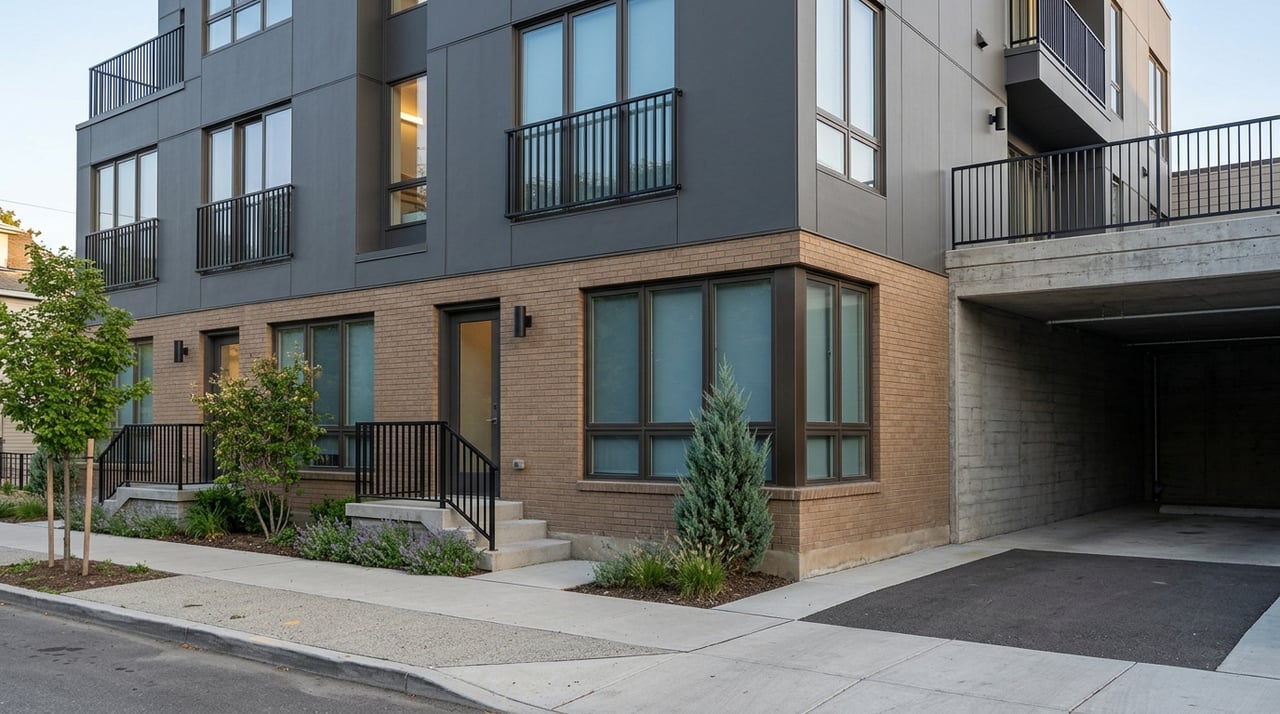
If you are looking at a small infill multifamily deal in Salt Lake County, the biggest risk may not be the building itself. It is often the entitlement path hiding underneath the site. Before you lock in a unit count, pricing, or schedule, you need to know which jurisdiction controls the property, what the zoning really allows, and where public review could slow you down. This guide walks you through the local entitlement planning issues that matter most so you can evaluate opportunities with more confidence. Let’s dive in.
Start With Jurisdiction
In Salt Lake County, entitlement planning begins with one basic question: who actually reviews the project? That answer changes the process, timeline, and decision makers.
For properties in unincorporated Salt Lake County, the County Planning Commission reviews items such as zoning changes, general plans, subdivision applications, and conditional uses. If the site is inside a city like Salt Lake City or South Salt Lake, that city runs its own planning division, review steps, and public process.
This matters because a small infill multifamily project can look feasible on paper but move very differently depending on the jurisdiction. Early confirmation of where the site sits can help you avoid building a strategy around the wrong code or hearing schedule.
Understand Why Infill Is So Site Specific
Salt Lake County faces real growth pressure. County planning materials say the valley could add 600,000 residents by 2065, with more than half of that growth expected west of Bangerter Highway.
At the same time, infill multifamily opportunities in the unincorporated county are limited and highly site specific. The county’s moderate-income housing planning notes that most land is zoned Forestry and Recreation, that multifamily acreage is limited, and that the current zoning mix allows relatively few housing choices.
That is one reason small multifamily deals require careful front-end work. A parcel may seem attractive because of location or price, but the real question is whether it can support the type of project you want to build.
Check The Base Zoning First
Your first due diligence step is to verify whether the property already sits in a district that can support the project. Salt Lake County Title 19 includes several zoning paths that may come into play, including medium-density residential zones, mixed-development zones, commercial zones, and planned community or planned unit development options.
For a small infill multifamily deal, the practical question is simple: is the use permitted, conditional, or likely to require a rezone or planned development path? That answer shapes your timeline, carrying costs, and risk from day one.
The zoning review should also go beyond a simple use label. County code makes clear that site plans, building and use permits, and compliance are part of the permit pathway, not something to sort out later. In other words, entitlement planning and permit planning should be coordinated early.
Review Overlays And Physical Constraints
Base zoning is only part of the picture. On many Salt Lake County sites, overlays and physical conditions can be just as important.
County code includes the residential compatibility overlay zone, airport overlay zone, floodplain hazard regulations, geological hazards ordinance, water-efficient landscape standards, utility placement regulations, and off-street parking requirements. The county also maps the Foothills and Canyons Overlay Zone, which is intended to balance development rights with environmentally sensitive development.
For infill sites near creeks, drainage corridors, foothills, or other sensitive areas, these overlay rules can affect layout, building placement, grading, and even feasibility. A project that works under base zoning may still need major changes if overlays add extra constraints.
Flood risk deserves special attention. Salt Lake County Flood Control advises owners to check whether property sits inside the regulated 100-year floodplain. That is not a box to check at the end. It is an early-stage feasibility issue that can influence design, cost, and timing.
Test Parking And Access Early
Parking is often one of the first hard constraints on a tight infill parcel. In Salt Lake County, the parking code generally requires two spaces per multiple-dwelling unit.
The code can also require guest parking in multifamily developments when private covered parking is used. On top of that, bicycle parking is required for new multifamily uses when automobile parking is required.
These standards matter because parking can quickly reduce buildable area or force design tradeoffs. On a small site, the difference between a workable concept and a stalled concept may come down to aisle width, access geometry, guest parking, or whether a constrained parcel can physically support the required count.
If a proposed use is not listed directly in the code table, the division director may determine required parking based on comparable ordinances and accepted planning standards. That makes early staff coordination especially valuable when your concept does not fit neatly into a standard category.
Treat Utilities And Platting As Entitlement Issues
For small multifamily infill, water, sewer, and platting are not just construction topics. They can become core entitlement items very early.
If the project needs a subdivision, lot split, condo plat, or another recorded plat, Salt Lake County Health requires a planning-agency referral, service-availability letters, subdivision plans, and proof of adequate water and wastewater disposal. County subdivision materials also call for a preliminary survey map, a schematic plat prepared by a design professional, and a stormwater concept plan, with engineer-prepared plans and profiles required later in the process.
That means you should not assume utility service can be solved after land use approval. If utility availability, stormwater handling, or plat structure is uncertain, those unknowns can affect both schedule and entitlement strategy.
Use Predevelopment Meetings To Save Time
One of the clearest lessons from local review systems is that early staff coordination usually saves time. In Salt Lake City, the Planning Counter serves as the first contact point and is part of a One-Stop Shop that includes planners and building code examiners.
The city also uses a Development Review Team with planning, building, public utilities, transportation, and engineering staff. South Salt Lake starts with a predevelopment consultation and then directs applicants to the appropriate path.
Even if your site is not in those exact jurisdictions, the pattern is useful across Salt Lake County. Early conversations can help you identify missing documents, code conflicts, access concerns, and utility issues before the application enters a formal review queue.
Expect Completeness To Drive The Timeline
A common reason small projects lose time is not always politics. Often, it is submittal quality.
South Salt Lake states that complete applications are processed in the order received, must include the required checklist, and are reviewed by multiple departments including planning, building, engineering, fire, and legal. It also notes that applications inconsistent with the municipal code may be denied.
That is a practical reminder for any Salt Lake County infill effort. A strong entitlement strategy is not just about picking the right zoning path. It is also about submitting a coordinated package that addresses likely technical comments before you are forced into delays, continuances, or redesign.
Know When Hearings Enter The Process
If your project needs a rezone, plan amendment, or another legislative action, public notice and hearing timing become critical. Under Utah law, land-use regulation changes require notice of the first public hearing and related public meetings.
The county planning commission must hold a public hearing and recommend action to the legislative body. The legislative body may then adopt or reject the proposal after its own noticed public meeting.
Utah law also requires at least 10 calendar days of mailed notice to affected entities for the public hearing. In Salt Lake County, Planning Commission meetings are typically monthly on the second Wednesday at 8:30 a.m., and larger projects may require additional meetings.
For a small infill project, that schedule can have a real impact. If you miss a filing window or need revisions before hearing, the delay may be measured in months rather than days.
Plan For Public Feedback
Neighborhood feedback is often the biggest soft risk in small infill multifamily. County and city processes both emphasize public engagement.
In Salt Lake City, projects may be routed to community councils, may involve online open houses when more than one neighborhood is affected, and legislative items ultimately go to the City Council for final decision. That means some proposals face both technical review and a more public-facing decision process.
On smaller sites, public feedback can influence massing, layout, parking placement, access, and unit count. A project may still move forward, but design flexibility early in the process can make it easier to respond without undermining the economics.
Bring In Specialists Before Formal Submittal
Infill projects usually go more smoothly when the right specialists are involved early. The safest timing is before a formal submittal, not after a denial or continuance.
A surveyor or platting consultant is often useful during early feasibility because county subdivision materials expect a preliminary survey map and related plan content. A civil engineer is also valuable early because stormwater, utility, and profile drawings may be required as the project advances.
If the property is affected by floodplain, foothills, canyons, slope, retaining conditions, or other mapped hazards, geotechnical or hazard support may be prudent early in the process. Salt Lake County GIS tools can also help with topographic and slope analysis before you spend heavily on design.
A practical sequence often looks like this:
- Land-use advisor or attorney at the acquisition or option stage
- Civil engineer and surveyor during feasibility
- Traffic or parking support when access is constrained or parking may need modification
- Geotechnical or hazard consultant when overlays, slopes, floodplain, or retaining issues are present
Focus On Front-End Alignment
The strongest small infill multifamily teams usually front-load key decisions. They verify zoning early, test civil feasibility before finalizing the concept, and think through stakeholder strategy before purchase terms become fixed.
In Salt Lake County, entitlement planning is rarely just about whether multifamily is allowed in theory. It is about matching the site to the right jurisdiction, zoning path, overlay conditions, utility realities, parking demands, and public-review track as early as possible.
If you are evaluating a site in Holladay, Millcreek, Murray, downtown Salt Lake, or nearby Salt Lake County submarkets, the value is in seeing issues before they become expensive surprises. That is where experienced local advisory can make a meaningful difference.
For owners, investors, and developers pursuing small multifamily or value-add infill opportunities, Dan Rip offers senior-level local guidance grounded in Salt Lake County entitlement, development, and public-private coordination experience.
FAQs
What does entitlement planning mean for a small infill multifamily project in Salt Lake County?
- It means confirming the correct jurisdiction, verifying zoning, reviewing overlays and physical constraints, and understanding the approval path before you finalize your design, purchase terms, or timeline.
Why is jurisdiction so important for multifamily entitlement in Salt Lake County?
- A property in unincorporated Salt Lake County follows county review procedures, while sites in cities such as Salt Lake City or South Salt Lake follow their own planning processes, staff review steps, and hearing procedures.
How does parking affect a small infill multifamily site in Salt Lake County?
- County parking rules can require two spaces per multiple-dwelling unit, guest parking in some cases, and bicycle parking, which can significantly shape layout and feasible unit count on a tight parcel.
When should you bring in consultants for a Salt Lake County infill multifamily project?
- It is usually best to involve land-use, survey, civil, and hazard specialists during acquisition or early feasibility, before formal submittal, so major constraints are identified before the process becomes more expensive or time-sensitive.
What commonly slows down multifamily entitlement in Salt Lake County?
- Delays often come from incomplete applications, unresolved civil or utility issues, parking and access constraints, overlay conditions, and public feedback that forces redesign or additional hearings.