Murray, Utah — Where Business Meets Opportunity
When commercial real estate investors, business owners, and corporate site selectors evaluate the Salt Lake Valley, Murray, Utah consistently rises to the top. Positioned at the true geographic center of the Wasatch Front's most active economic corridor, Murray offers something rare in today's market: established infrastructure, unmatched regional access, a diverse and growing consumer base, and commercial real estate opportunities across every asset class — retail, office, industrial, and multifamily. If you are searching for commercial property in Salt Lake City's metro area, Murray deserves serious attention.
At Dan Rip Commercial Real Estate, we specialize in helping investors, tenants, and business owners identify and execute on the best commercial opportunities Murray and the greater Salt Lake Valley have to offer.
Strategic Location: The Commercial Case for Murray
Location is the foundational principle of commercial real estate, and Murray's geography is one of its most compelling assets. Situated at the center of the Salt Lake Valley, Murray sits at the intersection of the Wasatch Front's primary transportation arteries. Interstate 15 provides two interchanges inside city limits, and Interstate 215 provides two additional interchanges at State Street and Union Park Boulevard. TRAX light rail runs directly through Murray with multiple station stops, connecting the city seamlessly to downtown Salt Lake City, the University of Utah, Sandy, and the international airport.
For retailers, this means access to the entire valley's consumer base. For office and medical tenants, it means an easily commutable address for employees across the metro. For industrial users and distributors, it means same-day delivery reach spanning the full Wasatch Front. Murray's central position is not a geographic coincidence — it has been the engine of commerce in this valley for over 150 years.
A Commercial Legacy Built on Industry
Murray's commercial DNA runs deep. Because of Murray's central location and access to the railroad, the first smelter was built there in 1870, and over the next 30 years Murray became home to some of the largest smelters of gold, silver, copper, lead, and zinc in the entire region. Murray was praised as a shining example of cooperation between business, industry, and government early in the twentieth century, hailed for its own water plant, lighting system, smelter, canning factory, flour mills, and brickyards.
That commercial spirit never left. When the industrial era closed, Murray pivoted — evolving into the retail, medical, office, and service economy it is today. Murray's central location makes it an ideal area for small businesses and service industries, and from 1950 to the present, its population and commercial base have continued to expand and prosper. Few cities in Utah have demonstrated the same capacity to reinvent and grow their commercial base across multiple economic cycles.
Murray's Commercial Corridor: State Street & The 5300 South Hub
The commercial backbone of Murray runs along State Street — one of the most trafficked retail and business corridors in all of Utah. This corridor passes directly through the Murray Downtown Historic District and anchors the city's primary retail concentration at 5300 South and Fashion Place Mall. The density of national and regional tenants along this stretch is a strong indicator of the consumer demand and daytime population that makes Murray commercial real estate attractive to investors and business owners alike.
Fashion Place Mall features the most distinct collection of shopping, dining, and entertainment in the Salt Lake City area. Both in terms of store variety and eating choices, Fashion Place is widely considered Utah's best mall — anchored by Nordstrom and Macy's and surrounded by a dense ecosystem of pad sites, outparcels, and inline retail. The 5300 South and State Street intersection represents one of the highest-traffic commercial nodes in the entire Salt Lake Valley, making surrounding retail and mixed-use properties consistently in demand.
National credit tenants operating in Murray include The Cheesecake Factory, P.F. Chang's, Brio Italian Grille, Costco, and a broad array of service, financial, and medical office users — a testament to the consumer spending power and traffic counts this market commands.
Medical Office & Healthcare: A Major Commercial Driver
Murray is home to Intermountain Medical Center — one of the largest and most advanced hospitals in the Intermountain West — which functions as a major economic anchor for the surrounding commercial market. The presence of a flagship hospital system generates consistent and durable demand for medical office space, outpatient facilities, specialty clinics, and healthcare-adjacent businesses. For investors focused on the medical office asset class, Murray's healthcare ecosystem is one of the strongest in the state.
Murray Commercial Real Estate Market: Key Statistics
Murray's real estate market reflects the sustained strength of the Salt Lake Valley economy. The median residential sale price in Murray recently reached $536K, representing an 8.6% year-over-year increase, with price per square foot climbing 10.2% in the same period — figures that signal the kind of demand-driven appreciation that benefits commercial investors and mixed-use developers alike.
Murray's population has grown 8.45% since 2000 and currently stands at approximately 49,500 residents, with daytime population swelling significantly due to the city's role as a major employment and retail hub. Murray maintains a population density of approximately 3,800 people per square mile and a median household income of $64,470 — a solid consumer spending baseline that supports retail, restaurant, and service business viability.
For multifamily investors, renters occupy approximately 32.8% of Murray's housing units, indicating a healthy and sustained rental demand pool in a market where for-sale inventory remains constrained. As the Salt Lake Valley continues to absorb population and employment growth, Murray's density and infrastructure position it as a natural target for multifamily development and value-add acquisitions.
Business & Workforce Access
Murray's central location makes it one of the most practical business addresses in the Salt Lake Valley. Employers based in Murray draw from a wide labor pool spanning the entire metro area, from Salt Lake City to the north and Sandy, Draper, and South Jordan to the south. TRAX light rail provides non-driving commute options that are increasingly important to workforce recruitment, particularly among younger professional talent.
The city's established retail and restaurant infrastructure — anchored by Fashion Place, the State Street corridor, Costco, and dozens of dining destinations from locally owned restaurants to national brands — means that employees enjoy a high quality-of-life environment that supports talent retention. Businesses considering a Murray address benefit from a location their team will actually want to commute to.
Murray's Top Dining & Retail Destinations: A Signal of Consumer Vitality
For commercial real estate investors, the concentration and quality of dining and retail in a market is one of the strongest proxies for consumer spending health. Murray's restaurant scene signals a market with real purchasing power and daytime population density.
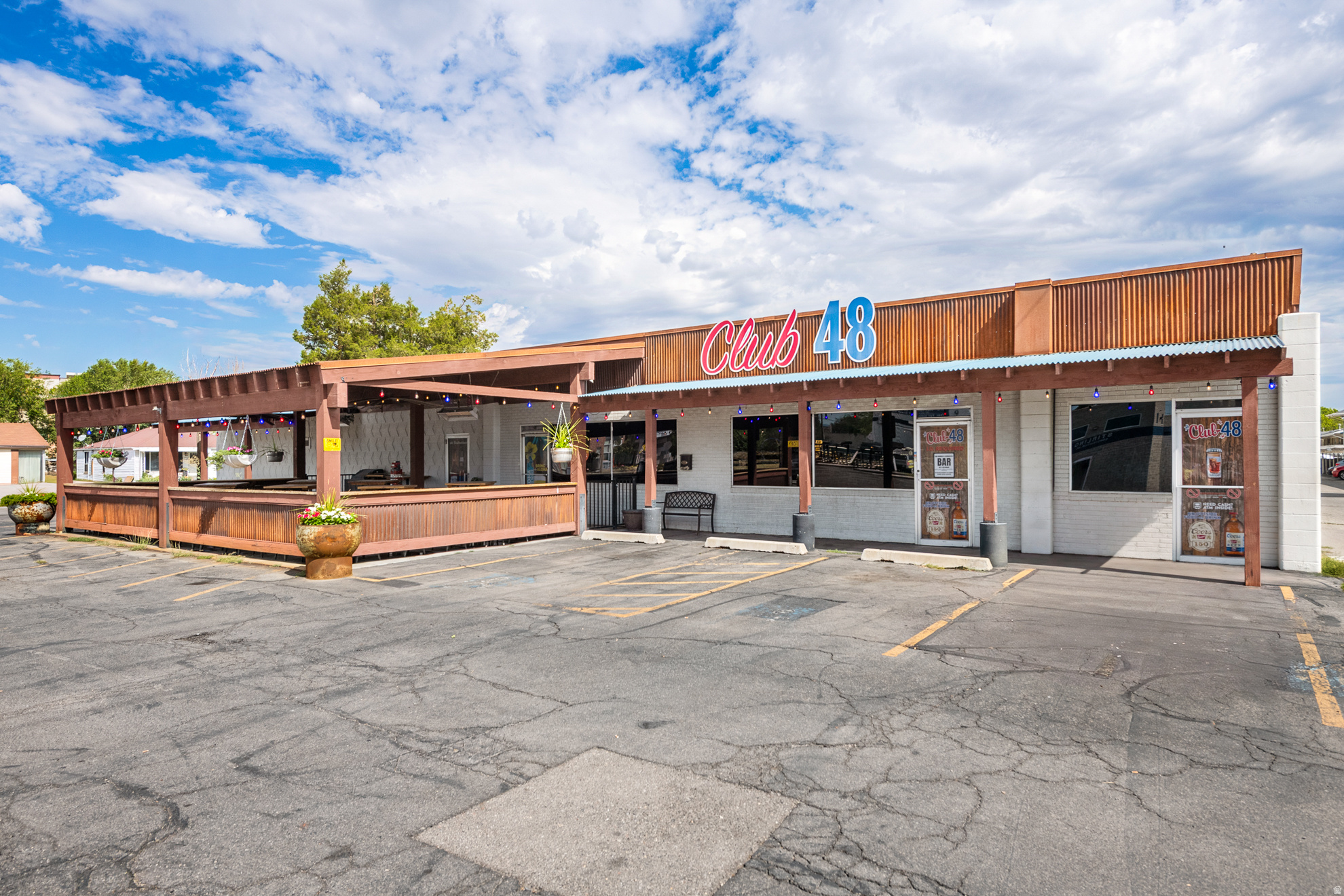
Standout dining destinations include Taqueria 27 at Fashion Place — a locally and veteran-owned restaurant group celebrated for innovative Mexican cuisine, made from scratch using fresh, locally sourced ingredients, and known for its extensive selection of premium tequilas and mezcals; Brio Italian Grille — a Tuscan-inspired restaurant serving authentic northern Italian cuisine, premium steaks, seafood, and handcrafted cocktails; Bohemian Brewery & Grill, a locally beloved anchor tenant driving consistent foot traffic; and Prohibition, a 1920s-themed bar and restaurant that has become one of Murray's most talked-about dining destinations.
The presence of these concepts — alongside national credit dining tenants like The Cheesecake Factory and P.F. Chang's — reflects a retail trade area with the spending depth to support diverse commercial investment.
Outdoor Amenities That Support Commercial Value
Quality of place is an increasingly important factor in commercial site selection, and Murray delivers on this front as well. The Jordan River Parkway offers a substantial system of natural trails along the Jordan River, including pedestrian and equestrian trails, picnic areas, and canoe launches connecting several significant city parks. Wheeler Historic Farm, operated by Salt Lake County, provides a uniquely irreplaceable community asset. These amenities contribute to Murray's livability score — which in turn supports employee recruitment, retail foot traffic, and residential absorption that underpins commercial demand.
Why Murray, Utah Belongs in Your Commercial Real Estate Portfolio
Murray checks the boxes that matter most in commercial real estate investment: location at the center of a growing metro, diverse and proven tenant demand across multiple asset classes, a transportation infrastructure that serves both employees and consumers, a healthcare anchor that drives medical office demand, and a retail corridor that consistently attracts national credit tenants. Combined with the long-term growth trajectory of the Salt Lake Valley and Utah's business-friendly regulatory environment, Murray represents one of the most well-rounded commercial real estate markets in the Mountain West.
Whether you are evaluating retail investment property in Murray, seeking office or medical space along the State Street corridor, exploring multifamily acquisition opportunities, or looking to relocate or expand your business in the Salt Lake Valley — we are here to help you move forward with confidence.
Connect with Dan Rip at danripcre.com to discuss Murray commercial real estate opportunities and get expert guidance on the Salt Lake Valley market.
49,904 people live in Murray City, where the median age is 38.2 and the average individual income is $46,243. Data provided by the U.S. Census Bureau.
Total Population
Median Age
Population Density Population Density This is the number of people per square mile in a neighborhood.
Average individual Income
There's plenty to do around Murray City, including shopping, dining, nightlife, parks, and more. Data provided by Walk Score and Yelp.
Explore popular things to do in the area, including Salty Dinner Theater, MrBeast Burger, and Tacos el Pariente.
| Name | Category | Distance | Reviews |
Ratings by
Yelp
|
|---|---|---|---|---|
| Dining | 0.54 miles | 5 reviews | 4.4/5 stars | |
| Dining | 0.59 miles | 11 reviews | 1.8/5 stars | |
| Dining | 0.68 miles | 3 reviews | 3.7/5 stars | |
| Dining | 0.94 miles | 10 reviews | 3.7/5 stars | |
| Dining | 1.06 miles | 0 reviews | 0/5 stars | |
| Dining | 1.11 miles | 0 reviews | 0/5 stars | |
| Shopping | 0.65 miles | 1 review | 5/5 stars | |
| Shopping | 0.86 miles | 3 reviews | 3.3/5 stars | |
| Shopping | 0.88 miles | 1 review | 1/5 stars | |
| Shopping | 0.88 miles | 9 reviews | 3.6/5 stars | |
| Shopping | 0.88 miles | 5 reviews | 2.6/5 stars | |
| Shopping | 0.88 miles | 1 review | 1/5 stars | |
| Shopping | 0.96 miles | 30 reviews | 3/5 stars | |
| Shopping | 0.96 miles | 41 reviews | 2.4/5 stars | |
| Shopping | 0.97 miles | 0 reviews | 0/5 stars | |
| Shopping | 1.05 miles | 0 reviews | 0/5 stars | |
| Active | 0.87 miles | 2 reviews | 2.5/5 stars | |
| Active | 0.99 miles | 40 reviews | 4.9/5 stars | |
| Active | 1.02 miles | 0 reviews | 0/5 stars | |
| Active | 1.07 miles | 5 reviews | 4.4/5 stars | |
| Beauty | 0.59 miles | 0 reviews | 0/5 stars | |
| Beauty | 1.12 miles | 0 reviews | 0/5 stars | |
|
|
||||
|
|
||||
|
|
||||
|
|
||||
|
|
||||
|
|
Murray City has 20,401 households, with an average household size of 2.43. Data provided by the U.S. Census Bureau. Here’s what the people living in Murray City do for work — and how long it takes them to get there. Data provided by the U.S. Census Bureau. 49,904 people call Murray City home. The population density is 4,050 and the largest age group is Data provided by the U.S. Census Bureau.
Total Population
Population Density Population Density This is the number of people per square mile in a neighborhood.
Median Age
Men vs Women
Population by Age Group
0-9 Years
10-17 Years
18-24 Years
25-64 Years
65-74 Years
75+ Years
Education Level
Total Households
Average Household Size
Average individual Income
Households with Children
With Children:
Without Children:
Marital Status
Blue vs White Collar Workers
Blue Collar:
White Collar: