Sandy & Draper, Utah — Where Mountain Living Meets Metropolitan Energy
Whether you're a business owner searching for your next commercial address, a family planting roots, or an investor eyeing a high-growth market, Sandy and Draper deliver on every front — with world-class outdoor access, thriving retail districts, an emerging tech economy, and a community character that keeps people here for generations.
CANYON ACCESS & OUTDOOR LIFESTYLE
One of the most compelling aspects of the Sandy–Draper corridor is its extraordinary access to Utah's iconic mountain canyons. Big Cottonwood Canyon, just minutes from Sandy's eastern edge, leads to Solitude Mountain Resort and Brighton Ski Resort — two beloved ski areas known for their deep powder, family-friendly atmosphere, and year-round outdoor programming. Little Cottonwood Canyon, equally close, is home to Snowbird and Alta, two of the most famous ski destinations in North America. Alta famously receives an average of over 500 inches of snowfall per year, making it one of the snowiest places in the world.
Beyond skiing, both canyons offer exceptional hiking, rock climbing, waterfall chasing, and wildflower meadows in the warmer months. Residents of Sandy and Draper live within a 20-minute drive of a backcountry wilderness experience that most Americans would need to fly to access. This is what makes the Sandy–Draper real estate market so persistently strong: you truly get the best of both worlds — urban convenience and mountain escape — without compromise.
SANDY CITY
Sandy City, Utah's seventh-largest city with a population of approximately 96,000, has quietly evolved from a quiet agricultural community into one of the most desirable addresses in the greater Salt Lake area. Incorporated in 1893, Sandy's roots trace back to settlers who farmed the fertile land along the Jordan River — but today, the city is better known for its professional soccer stadium, its premier shopping destination, and its unmatched proximity to Utah's legendary ski resorts.
Sandy is home to America First Field (formerly Rio Tinto Stadium), a 20,213-seat soccer-specific stadium that serves as the home of Real Salt Lake, one of Major League Soccer's most storied franchises. It's one of the finest soccer venues in the Western United States and hosts concerts, events, and international matches throughout the year.
History note: Sandy City was originally settled by Latter-day Saint pioneers and was named for the sandy soil found along its creeks — a humble origin for what has become a sophisticated suburban hub. The area once hosted several smelter operations in the late 1800s, processing ore brought down from the nearby Wasatch canyons, leaving a fascinating industrial legacy beneath its modern surface.
Fun fact: Sandy sits at an elevation of approximately 4,500 feet, giving residents cooler summers, stunning Wasatch panoramas, and access to Big Cottonwood Canyon and Little Cottonwood Canyon — two of Utah's most celebrated mountain corridors — in less than 15 minutes by car.
Where to eat in Sandy: Slackwater Pizzeria is a local favorite for craft beer and creative pies. Sauce Boss Southern Kitchen brings bold Southern BBQ flavors to the valley. Makanmakan is a standout for those craving fresh, vibrant Southeast Asian cuisine.
Where to shop in Sandy: The Shops at South Town — the Salt Lake Valley's premier regional mall — anchors Sandy's retail landscape with over 130 stores including Nordstrom, Apple, and dozens of specialty retailers. The surrounding Sandy Parkway commercial district is also a thriving hub for restaurants, boutique fitness, and professional services.
Don't miss: The Loveland Living Planet Aquarium, one of the largest aquariums in the Intermountain West, is a must-visit for families and an iconic Sandy landmark. Hale Centre Theatre, also based in Sandy, is nationally recognized for its award-winning theatrical productions performed in-the-round.
DRAPER CITY
Draper City is one of the fastest-growing and most strategically positioned communities in Utah — and increasingly, in the entire Mountain West. Located at the southern tip of the Salt Lake Valley where Salt Lake County meets Utah County, Draper offers a rare combination of executive-level residential living, a booming tech and corporate ecosystem, and some of the most dramatic outdoor terrain in the region.
Draper was settled in 1849 by William Draper, one of the original pioneer settlers of the Salt Lake Valley, and was formally incorporated as a city in 1978. For much of its early history, Draper was known for the Utah State Prison, which was located there for decades before the facility relocated — freeing up a major swath of prime real estate now being redeveloped into a transformative mixed-use district known as the Point of the Mountain development. This massive, multi-decade project is expected to create tens of thousands of jobs and reshape the economic geography of the entire region, making Draper one of the most exciting commercial real estate markets in the country.
Fun fact: The area known as Point of the Mountain — where Draper meets Lehi — is internationally renowned among hang-gliding and paragliding enthusiasts as one of the premier launch sites in North America. On a clear afternoon, you can watch dozens of colorful gliders soaring against the backdrop of Mount Timpanogos and the Oquirrh Mountains simultaneously.
Draper is also the gateway to Corner Canyon, a world-class mountain biking and trail running destination with over 50 miles of designated trails winding through scrub oak and pine terrain directly behind residential neighborhoods. Biking Media consistently ranks Corner Canyon among the top urban trail systems in the United States.
Where to eat in Draper: Oak Wood Fire Kitchen serves up artisan wood-fired dishes in an upscale-casual setting. Eix Bistro offers a sophisticated farm-to-table dining experience. Communal Restaurant brings a community-style approach to seasonal, locally sourced cuisine. For something more casual, the area is home to a growing collection of chef-driven fast-casual concepts that reflect Draper's young, health-conscious professional demographic.
Where to shop in Draper: The Draper Peaks shopping center and the Station Park-adjacent are thriving retail corridors along Bangerter Highway provide a strong mix of national retailers, boutique fitness studios, furniture row and other specialty stores. The Traverse Ridge and South Bangerter corridors are evolving rapidly as the Point of the Mountain development accelerates.
110,785 people live in Sandy / Draper, where the median age is 37.2 and the average individual income is $49,817. Data provided by the U.S. Census Bureau.
Total Population
Median Age
Population Density Population Density This is the number of people per square mile in a neighborhood.
Average individual Income
There's plenty to do around Sandy / Draper, including shopping, dining, nightlife, parks, and more. Data provided by Walk Score and Yelp.
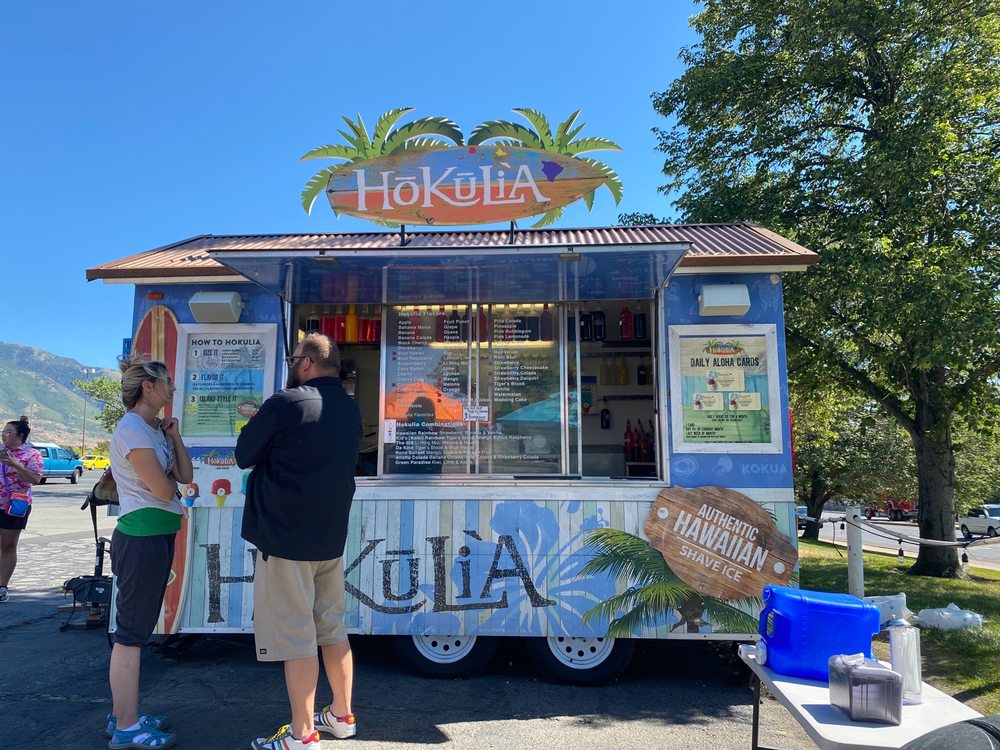
Explore popular things to do in the area, including Hokulia Shave Ice, Smith's Food & Drug Centers, and Kriska Painting On Silk.
| Name | Category | Distance | Reviews |
Ratings by
Yelp
|
|---|---|---|---|---|
| Dining · $ | 2.62 miles | 14 reviews | 3.9/5 stars | |
| Dining · $$ | 3.42 miles | 37 reviews | 2.8/5 stars | |
| Shopping | 1.67 miles | 0 reviews | 0/5 stars | |
| Shopping | 3.54 miles | 0 reviews | 0/5 stars | |
| Active | 1.58 miles | 0 reviews | 0/5 stars | |
| Active | 3.28 miles | 0 reviews | 0/5 stars | |
| Active | 3.33 miles | 0 reviews | 0/5 stars | |
| Active | 3.38 miles | 2 reviews | 3.5/5 stars | |
| Active | 3.61 miles | 3 reviews | 2.3/5 stars | |
| Beauty | 3.34 miles | 0 reviews | 0/5 stars | |
| Beauty | 3.41 miles | 73 reviews | 2.7/5 stars | |
| Beauty | 3.56 miles | 0 reviews | 0/5 stars | |
| Beauty | 3.56 miles | 0 reviews | 0/5 stars | |
| Beauty | 3.64 miles | 25 reviews | 3.1/5 stars | |
| Beauty | 3.65 miles | 0 reviews | 0/5 stars | |
|
|
||||
|
|
||||
|
|
||||
|
|
||||
|
|
||||
|
|
Sandy / Draper has 37,886 households, with an average household size of 11.7. Data provided by the U.S. Census Bureau. Here’s what the people living in Sandy / Draper do for work — and how long it takes them to get there. Data provided by the U.S. Census Bureau. 110,785 people call Sandy / Draper home. The population density is 3,628 and the largest age group is Data provided by the U.S. Census Bureau.
Total Population
Population Density Population Density This is the number of people per square mile in a neighborhood.
Median Age
Men vs Women
Population by Age Group
0-9 Years
10-17 Years
18-24 Years
25-64 Years
65-74 Years
75+ Years
Education Level
Total Households
Average Household Size
Average individual Income
Households with Children
With Children:
Without Children:
Marital Status
Blue vs White Collar Workers
Blue Collar:
White Collar: